Running outbound campaigns in India means operating inside TRAI's telecom commercial communication rules. None of this is optional, and getting it wrong risks blocked numbers and regulatory penalties — not just a bad customer experience. Here's a working checklist before any campaign goes live.
Check consent and registry status first
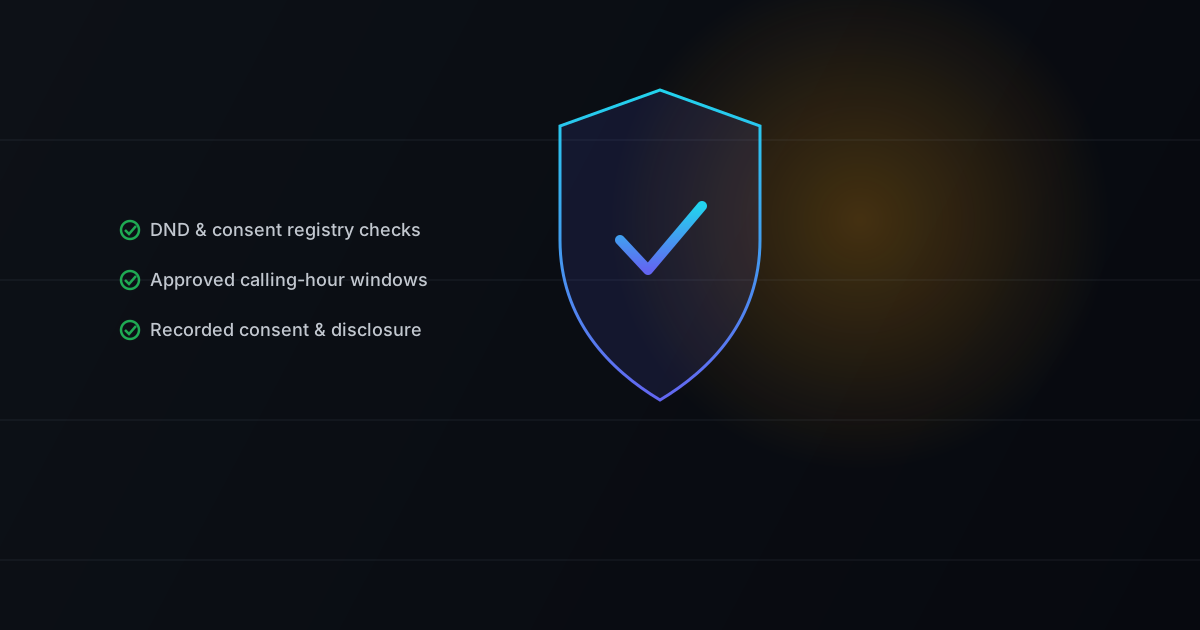
- Confirm the contact has given consent to be called for commercial purposes, or falls under an existing customer relationship
- Cross-check numbers against the National Do Not Disturb (DND) registry before dialling
- Keep a record of when and how consent was captured, for at least as long as your data retention policy requires
Respect approved calling windows
Commercial calls should be placed within the hours permitted for telemarketing communication, not whenever a campaign happens to be scheduled. Building calling windows into campaign settings, rather than trusting manual scheduling, removes the most common source of accidental violations.
Disclose that the call may involve an AI agent
Transparency matters both for trust and for compliance. Calls should open with a clear identification of the business calling and, where an AI voice agent is used, a disclosure that the customer is speaking with an automated assistant.
Keep records, not just intentions
Recordings, transcripts, and disposition logs aren't just useful for sales follow-up — they're the evidence trail that shows a campaign was run compliantly if a complaint or audit ever comes up. Treat call records as a compliance asset, not only a sales one.
Review your contact list hygiene regularly
Numbers that have opted out, been marked not-interested, or flagged as wrong contacts should be suppressed from future campaigns automatically. A clean, actively maintained suppression list is one of the simplest ways to stay compliant and protect sender reputation.